
Selling a home after 15, 20, or 30 years involves a different set of decisions than the typical seller guide covers. The equity is there. The motivation is real. But the path from "we've decided to sell" to "we're handing over the keys" looks different when the home has decades of life in it, and the steps that matter most aren't always the ones that come up first.
For homeowners in Western North Carolina, that usually means approaching the process with a bit more lead time and a clearer plan. When you've been in one place for a long time, you're not just selling a property. You're transitioning from a chapter that holds years of routines, projects, and memories. The logistics deserve just as much attention as the pricing strategy.
Here's what we walk long-term homeowners through before they list.
Start With the Belongings, and Start Earlier Than You Think
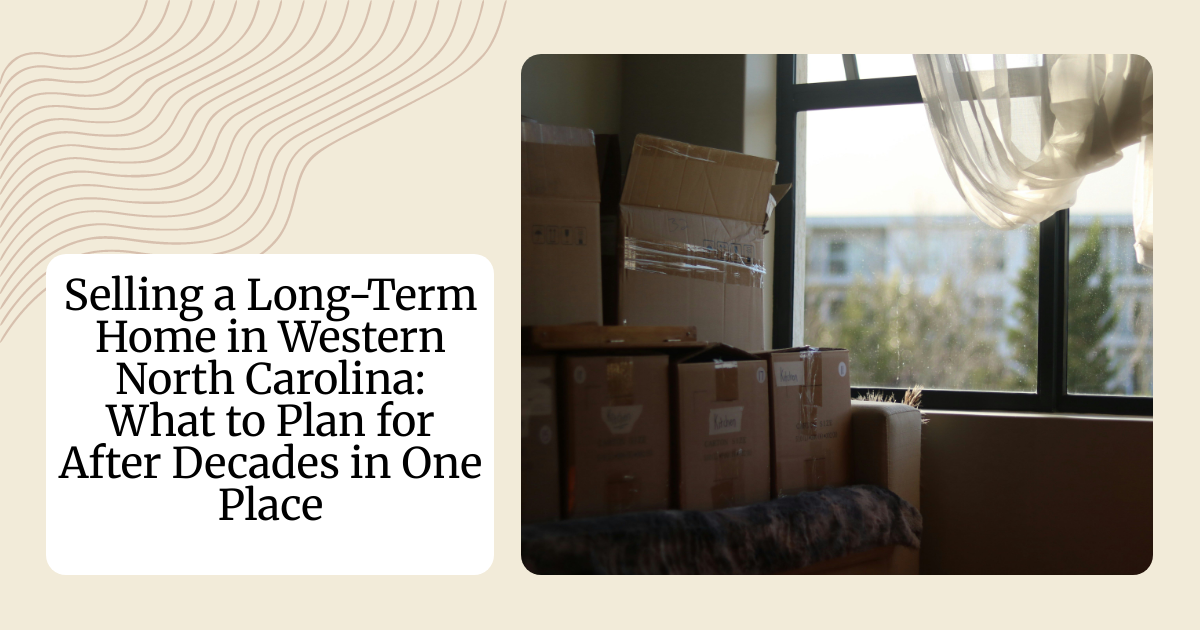
The first practical challenge for most long-term sellers isn't the listing price or the condition of the kitchen. It's the volume of what's accumulated over decades of living in one place. Furniture, seasonal items, hobby gear, kids' things that never left, paperwork going back years. A house that's been genuinely lived in carries a lot.
Sorting in stages over several weeks is manageable. Trying to do it all at once, under the pressure of an approaching listing date, turns a reasonable project into an overwhelming one. Sellers who give themselves lead time move through this part of the process with far less friction.
A practical approach: go room by room and put everything into one of four categories. What moves to the next home. What goes to family. What gets donated. What gets discarded. The goal isn't to empty the house; it's to make clear decisions about each item rather than letting the pile grow. Estate sale companies, donation pickups, and junk removal services can all handle volume efficiently, and we can point you toward resources in your area.
Getting ahead of this step also gives you flexibility. If you decide to repaint, refinish floors, or stage selectively, it's much easier to do that work in a home that's already been edited down. Early sorting creates options later.
What "Dated" Means to a Buyer, and What It Doesn't
Not every original feature from 20 years ago is a liability. Some things hold up well. Others register as an issue the moment a buyer walks in, and knowing which is which before you spend money helps you focus on the right things.
Original carpet, paint, lighting fixtures, and kitchen hardware are relatively inexpensive to update and have an outsized effect on how a home photographs and shows. These are generally the updates that move the needle before listing.
Aging major systems are a different calculation. A furnace or roof that's older but functional may be better handled through pricing or a credit to the buyer rather than a full replacement before the sale. The right call depends on the condition, the local market, and what comparable homes are offering. That's a conversation we have with every long-term seller before any decisions get made.
On the other side of this: original hardwood floors, solid construction, mature landscaping, and established neighborhoods are draws that newer builds genuinely can't replicate. Long-term homes carry character, and buyers respond to it. Our job is to make sure that's front and center in how your home is presented.
When we walk through your property together, we're looking at it through a buyer's lens. Where will they pause? What will feel turnkey? What might raise a question during a showing? Clarifying those points early helps you invest time and money where it counts and skip updates that won't meaningfully affect your outcome.
Pricing for the Home You Have, Not the Home You Remember
The market prices condition, location, and comparable sales. A grounded conversation about where your home sits relative to current conditions, held early in the process, produces better outcomes than starting high and adjusting after weeks without offers.
This doesn't mean a long-term home can't command a strong price. Many do, and we've seen it. It means the number needs to be supported by what the market is doing and what the home's current condition reflects. We bring the data, we walk you through the comparables, and we help you land on a price that's both competitive and defensible.
In our market, buyers have access to the same sales history and online information that we do. A price that aligns with condition and recent comparable sales builds credibility from day one. That credibility often translates into stronger showings, clearer feedback, and more confident offers.
Capital Gains: Get the Right Advice Before You Close
Homeowners who purchased decades ago often have substantial gains on the sale, and tax treatment varies depending on where you live. Rules differ across countries, provinces, and states, and individual situations can be complex.
Before closing, a conversation with a tax professional who can assess your specific situation is a sound step. We flag this early in our process with long-term sellers because getting the right guidance ahead of time avoids complications at closing. We'll point you in the right direction; the specifics belong with a qualified tax professional.
Even if you believe your situation is straightforward, it's worth confirming. Understanding potential tax implications in advance gives you clarity about your net proceeds and helps you make informed decisions about your next purchase.
Selling Before You Buy
Long-term homeowners often need to sell before purchasing their next home, which adds a layer of coordination that shorter-term sellers don't face. Understanding what options are available before committing to a listing date is something we work through with you from the start.
Depending on where you're selling and where you're going, there may be contingency options that give you flexibility on the purchase side. Bridge financing, which allows you to access equity from your current home before it closes, is available in some markets. Post-closing occupancy agreements, where you stay in the home briefly after closing while you finalize your next move, are another option that can take significant pressure off the transition.
These aren't complicated arrangements, but they require planning and local knowledge. We map this out with you before the listing goes live so the logistics are settled before offers arrive.
Having a written plan for timing, access to funds, and your next housing step changes the tone of the entire process. Instead of reacting to deadlines, you're making decisions from a place of clarity.
What This Process Looks Like With the Right Support
Selling a long-term home is a larger undertaking than selling a home you've been in for a few years. More decisions, more sorting, more coordination. But it's a process we've guided many homeowners through, and the path is clearer than it looks from the starting point.
The most useful thing you can do right now is get a clear picture of where your home stands, what it will take to prepare it, and what the move to your next chapter looks like on the other side. We help you build that picture, and we stay with you through every step that follows.
If you've been in your home for a long time and aren't sure where to start, reach out. We'll walk through it together.
Thinking about selling your home?
Get in touch. We'll guide you through every step of the process to ensure a smooth transaction that meets your goals.